
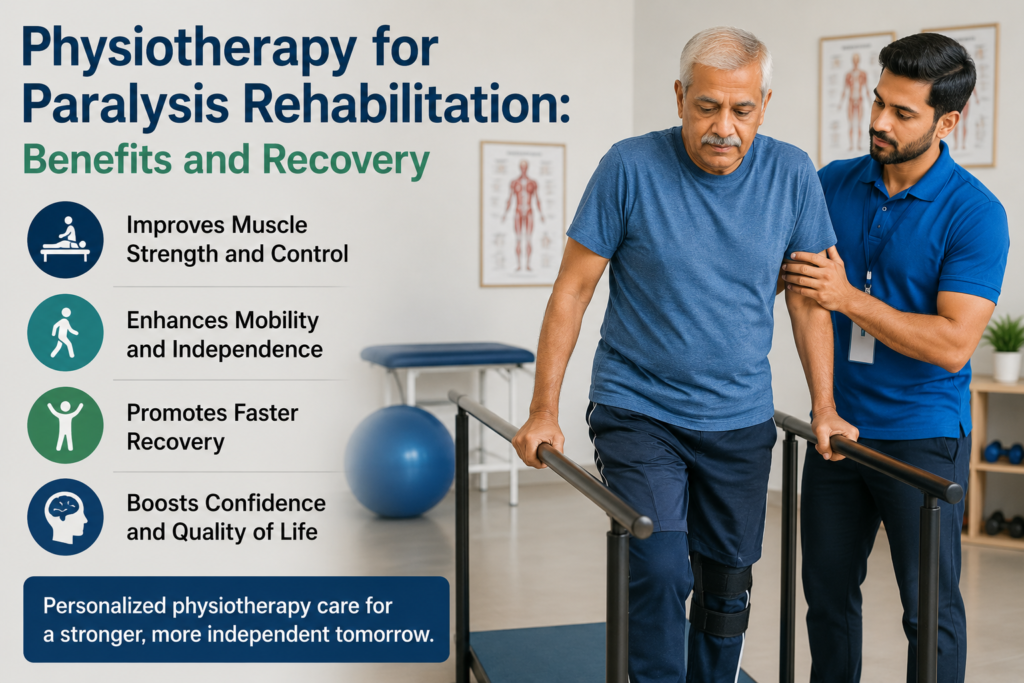
The experience of experiencing paralysis – whether it is sudden as a result of a stroke, or results from an injury to the spinal cord is overwhelming and traumatic. The experience alters one’s day-to-day routine, stripping away mobility and autonomy immediately. However, our body is extremely resilient. Physiotherapy for paralysis rehabilitation can bridge the gap between losing function and returning to your normal life, providing a method for rebuilding resilience and self-confidence.
The Core of Physiotherapy for Paralysis Rehabilitation
In the simplest sense, neurologic rehabilitation is dependent on a remarkable aspect of the human brain known as neuroplasticity. If an injury causes damage to the spinal cord and brain, the pathways used to relay signals from movement become blocked. Specific physical therapy treatments are designed to “rewire” these pathways by encouraging your brain to discover new routes for sending those crucial messages to muscles.
Components of Paralysis Recovery Physiotherapy Treatment
Every person’s condition is unique. This is the reason a paralysis recovery physiotherapy treatment is not a one-size-fits-all solution. The plan is customised to meet your individual needs, and often will include:
- Neuro-Developmental Therapy (NDT): Hands-on techniques to help your body learn normal movements in balance and posture.
- Constrained-Induced Movement Therapy (CIMT): An innovative method where the limb that is stronger is temporarily restricted and forces the brain to concentrate on restructuring the paralysed leg.
- Functional Electrical Stimulation (FES): Utilising gentle electrical impulses to awaken muscle cells that are dormant and paralysed.
The Real-World Benefits of Physiotherapy for Paralysis
The commitment to rehabilitation programs is more than simply performing a limb movement; it also shields your body from complications that can cause further harm and improves your mental health.
Key Benefits of Physiotherapy for Paralysis
- Fighting Muscle Atrophy: When muscles are idle for long periods of time, they begin to lose mass. Regularly scheduled exercise helps keep the muscles active and healthy.
- Preventing joint contractions: If joints aren’t moving, they may freeze, causing pain. permanently positioned places. Regular stretching helps them stay flexible.
- Enhancing Circulation: Moving the body keeps blood clots from becoming dangerous (DVT) and uncomfortable bedsores.
- Regaining autonomy: The process is step-by-step. Therapy focuses on everyday triumphs, like sitting in bed, getting up to an office chair, and eventually making independent decisions.
Essential Rehabilitation Exercises for Paralysis Recovery
The movement is the best therapy for restoring nerve function. Based on the place a patient is at in their recovery therapy, the therapist may utilise a certain combination of rehabilitation exercises for paralysis recovery to help accelerate progression.
Core Exercise Stages
- Active Range of Motion (PROM): If you are unable to move, the therapist moves your legs in order to maintain the flexibility of your joints.
- Active-Assisted Exercises: It’s all you have, and the therapy assistant is just there to help you complete the exercise.
- Active Exercises: When strength begins to trickle back into your body, you can do the exercises completely independently to develop pure power.
- Gait and Balance Training: Crucial drills designed to help you discover your centre of gravity and learn how to safely walk over and over.
The Journey Forward
The process of recovering from paralysis is not linear. It’s a process of endurance, which is comprised of periods of stagnation, accompanied by abrupt leaps of faith. Since the nervous system heals according to its own rhythm, having a professional at your side will make all the difference.If you’re in the middle of the path of recovery, working with an experienced Physiotherapist in Delhi provides access to the most advanced rehabilitation techniques and individualised treatment programs. A committed Physiotherapist in Delhi is not just there to protect your body in intense exercise, but also to assist you in your recovery in a way of motivation, and ensure that you make the most from your treatment for paralysis.