
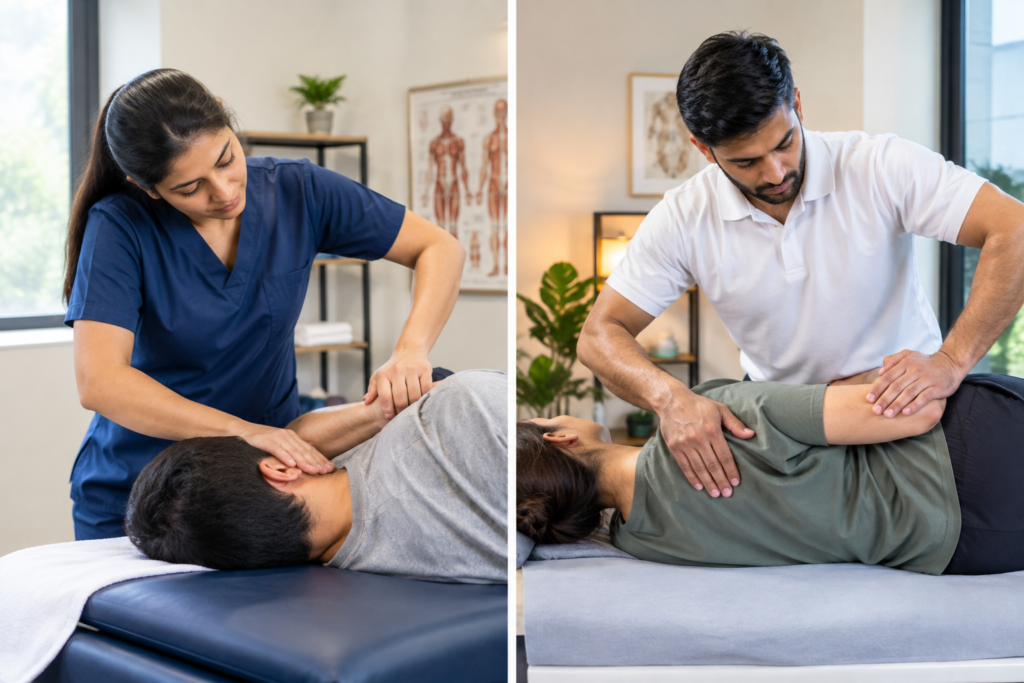
Back pain doesn’t wait for a convenient time. It shows up in the middle of a workday, or when you’re trying to sleep, and suddenly you’re down a rabbit hole of Google searches trying to figure out what’s actually wrong. At some point, two options tend to surface — manual therapy in Delhi and osteopathy. They both sound hands-on and helpful, and they are. But they work in pretty different ways, and knowing that difference could save you weeks of going in the wrong direction.
Let’s break it down simply.
What Is Manual Therapy in Delhi?
Think of it as physiotherapy with more direct, physical involvement. Instead of being handed a list of exercises and left to figure it out on your own, a physiotherapist gets hands-on — working on the exact joint or muscle that’s causing you trouble.
The techniques used vary. Joint mobilization, soft tissue work, stretching — it depends on what your body needs. But the aim is consistent: ease the pain, get the movement back, and help you feel functional again.
People seek out manual therapy in Delhi for things like:
- Neck and lower back pain
- Frozen shoulder
- Sports injuries
- Post-surgical stiffness
- Sciatica
The other thing worth knowing? It rarely stops at just the hands-on part. Most physios layer a proper exercise plan on top, so you’re not just getting better in the clinic — you’re keeping that progress going at home too.
What Is Osteopathy Treatment in Delhi?
This is where the philosophy shifts a bit. Osteopathy treatment in Delhi doesn’t zero in on a single painful spot. It pulls back and looks at the whole picture — how your body is actually moving, and where something might be going wrong beneath the surface.
The thinking behind osteopathy Delhi is that the body works as one connected unit. So if your lower back has been aching for months, the real source of the problem might be your hips, your posture, or even how you breathe. An osteopath will spend time exploring all of that, not just the place that hurts.
Sessions typically involve a blend of gentle manipulation, targeted pressure, and stretching — applied across different areas of the body, not just the painful one. You might also find yourself talking about your daily routine, the way you sit, and lifestyle habits. All of it is relevant.
This kind of care tends to connect with people who’ve tried plenty of things and never quite got to the bottom of what’s wrong. Not one clear injury — just an ongoing sense that something is off.
So How Are They Actually Different?
Plenty of overlap exists, but the distinctions matter:
- Scope of focus: Manual therapy in Delhi works on a specific area. Osteopathy treats the body as a system.
- Who delivers it: Manual therapy comes from physiotherapists. Osteopathy is practiced by osteopaths with their own dedicated training.
- What you’re working toward: Manual therapy is typically tied to recovery — getting you back from an injury or surgery. Osteopathy Delhi practitioners tend to think longer term, looking at how your body functions as a whole and how to keep it that way.
- How the sessions feel: Manual therapy is usually focused and relatively short. Osteopathic sessions tend to be broader, with more time spent looking at the full picture before treatment even begins.
If you know what went wrong and when, manual therapy in Delhi is often the more direct route back. If the pain keeps coming back without a clear reason, osteopathy treatment in Delhi might finally get you some real answers.
Osteopathy Treatment in Paschim Vihar
For a long time, finding a decent osteopath in West Delhi meant hauling yourself across town. That’s no longer the case. Osteopathy treatment in Paschim Vihar has become genuinely accessible, with qualified practitioners now working locally and offering proper, thorough consultations.
What tends to set good osteopathy treatment in Paschim Vihar clinics apart is the time they give you. They’re not rushing through appointments. They want to understand how you move, how you live, and what might be quietly contributing to the pain — not just what hurts today.
Finding the Right Fit for You
Honestly, both approaches have real value. It just depends on what you’re dealing with.
A specific injury with a clear recovery goal? Manual therapy in Delhi from a qualified physiotherapist can make a noticeable difference, often within a few weeks. Chronic discomfort that keeps cycling back, no obvious cause, whole-body tightness or imbalance? Osteopathy Delhi might be the thing that finally addresses the root of it.
And whoever you choose to work with — that matters just as much as the treatment itself. The Physiotherapist in Delhi website is a solid starting point if you’re not sure where to look. It connects patients with experienced, trusted therapists across the city, including those offering osteopathy treatment in Paschim Vihar.