When a stroke happens, nothing prepares you for how quickly ordinary life disappears. A morning that started with breakfast and a commute can end with a person unable to lift their arm or speak clearly. Parkinson’s disease moves more slowly — but for patients and families, the gradual loss of automatic movement can be just as bewildering. These aren’t abstract clinical scenarios. They’re what neuro physiotherapists in Gurgaon work with every day.
Neuro physiotherapy treatment in Gurgaon sits within a specialized corner of physical therapy — one that focuses entirely on conditions originating in the brain, spinal cord, or peripheral nervous system. Rather than treating a ligament tear or managing post-surgical swelling, neuro physiotherapy works on the disrupted signals between the brain and body. Sometimes that means restoring lost pathways. Sometimes it means building new ones.
Gurgaon’s growing network of neuro physiotherapy clinics now includes home visit options, which isn’t a minor detail — many patients in the early stages of stroke recovery simply can’t manage the logistics of clinic attendance without that flexibility.
What Does Neuro Physiotherapy Treatment in Gurgaon Involve?
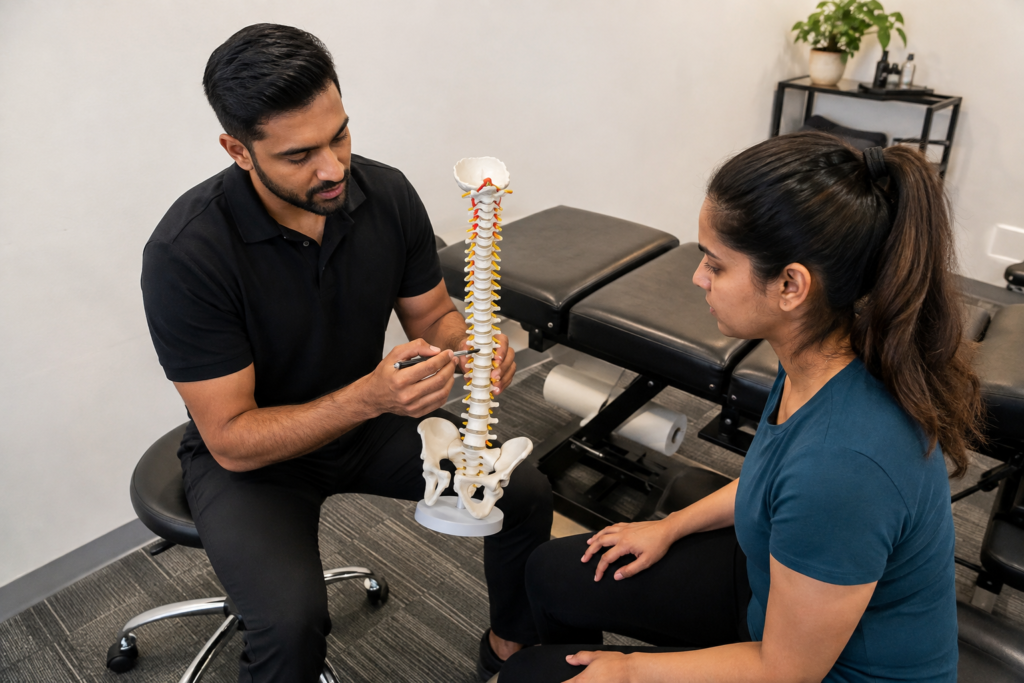
First a comprehensive assessment is done before any exercises are given. A physiotherapist will assess how a patient walks, assess their balance on different surfaces, and assess how they perform practical tasks – standing from a chair, reaching across a table, negotiating a step. That initial picture shapes every decision that follows.
Sessions then typically draw from several areas:
- Gait retraining — often using parallel bars or supported treadmill walking in clinic, with close attention to stride length, foot clearance, and weight shift
- Neuromuscular re-education through repeated, task-specific drills that encourage the brain to establish new motor pathways
- Balance work on unstable surfaces — foam pads, wobble boards — which challenges the proprioceptive system in ways flat-ground walking doesn’t
- Targeted strength training for specific muscle groups: post-stroke patients frequently need focused work on hip abductors, quads, and ankle dorsiflexors
- Manual therapy to address spasticity before it leads to permanent joint stiffness
Recovery rarely follows a straight line. A patient might regain the ability to stand independently within two weeks, then spend three more months working on safe outdoor walking. Clinicians track progress in functional terms — can someone make tea without help, cross a street, manage a grocery trip — because those are the benchmarks that actually shape daily life.
Hemiplegia Treatment in Gurgaon: Rebuilding Movement After Stroke
Around 80% of stroke survivors experience hemiplegia to some degree — weakness or paralysis affecting one side of the body. Depending on which part of the brain was affected, that can mean a dropped arm, a dragging leg, facial muscle weakness, or some combination.
Hemiplegia treatment in Gurgaon pulls from several well-researched approaches:
- Constraint-Induced Movement Therapy (CIMT): The stronger limb is purposely constrained for long durations, pushing the weaker side to compensate. There is clinical evidence for considerable motor gains with CIMT in patients years post-stroke, not only in the acute phase.
- Mirror therapy: the patient watches their unaffected hand move while the affected arm stays hidden behind a mirror. The visual input activates the motor cortex on the impaired side — particularly useful for hand and finger recovery.
- Task-specific training using objects from everyday life: keys, cups, buttons, a phone. The specificity matters — abstract repetitive exercises don’t carry over to real tasks as effectively.
- Functional electrical stimulation (FES) applied to weakened muscle groups during therapy sessions to support movement that patients can’t yet produce independently
Timing is a genuine factor here. Starting hemiplegia treatment in Gurgaon within days of medical stabilization — not weeks — gives the brain the best conditions for recovery. Neuroplasticity is highest in the first three to six months after a stroke, and that period shouldn’t be spent waiting.
Parkinson Disease Treatment in Gurgaon: Managing Symptoms Through Movement
Parkinson’s doesn’t present identically across patients. For one person, the primary challenge is a resting tremor. For another, it’s freezing of gait — that jarring moment where the feet simply stop moving, often at a doorway or when turning. A physiotherapy program that doesn’t account for that variation isn’t going to serve anyone well.
Parkinson disease treatment in Gurgaon typically addresses several overlapping problems:
- Falls prevention: Parkinson’s patients fall at roughly twice the rate of healthy older adults. Dual-task balance training — walking while simultaneously performing a cognitive task — consistently outperforms standard balance exercises done in isolation, probably because it better mimics real-world demands.
- Gait disruption: freezing episodes, shortened stride, and involuntary speed changes all respond to external rhythmic cues. Using a metronome or music calibrated to a target walking cadence is practical, evidence-backed, and inexpensive.
- LSVT BIG therapy: a structured, high-intensity program built specifically for Parkinson’s that trains patients to make deliberately large movements. The rationale is straightforward — the disease progressively shrinks movement amplitude, so recalibrating toward bigger, more deliberate movement helps counter that trend.
Coordinating with the treating neurologist matters here too. Motor performance in Parkinson’s patients changes significantly depending on where someone is in their medication cycle. A session timed during an “off” period looks very different from one during a patient’s peak window — and that affects what you can realistically work on.
Treatment plans for Parkinson’s patients are reassessed regularly, typically every six to twelve weeks for those who are medically stable. The condition doesn’t stay static, and the program shouldn’t either.
Bell’s Palsy Treatment in Gurgaon: Restoring Facial Function
Bell’s palsy usually comes without warning — a sudden one-sided facial droop developing over hours, driven by inflammation of the seventh cranial nerve. Most people recover well, but around 30% experience incomplete recovery. A smaller subset develops synkinesis: involuntary muscle contractions where the wrong muscles fire during facial movement — the eye closing when you smile, for instance. That complication can be more disruptive than the original palsy.
Bell’s palsy treatment in Gurgaon works best when it starts early, preferably within the first week of symptoms:
- Neuromuscular retraining (NMR) — patients practice isolated movements in front of a mirror, learning to separate muscle groups that have started firing together inappropriately. Surface EMG biofeedback makes this more precise by showing patients in real time which muscles are activating.
- Soft tissue massage and facial mobilization to maintain circulation and reduce tightness
- Targeted exercises for specific muscles — eyelid closure, smile, brow raise — done in short, frequent sessions rather than long occasional ones
- Guidance on corneal protection during the acute phase, since incomplete eyelid closure creates a real and underappreciated risk of eye damage
Finding the Right Neuro Physiotherapy Support
Proximity shouldn’t be the deciding factor when choosing a provider. What’s worth asking: what proportion of their caseload is neurological? A clinic seeing post-stroke and Parkinson’s patients regularly will have sharper clinical judgment than one that handles these cases occasionally between sports injuries. Ask what outcome measures they use. Ask how often they reassess. How a clinician responds to those questions is often more revealing than their marketing materials.
For patients outside Gurgaon or based closer to the capital, the Physiotherapist in Delhi website offers access to comparable neuro-rehabilitation services, including home visit options for patients with limited mobility.
One thing worth saying plainly: neurological recovery takes longer than most patients expect. Setting specific functional goals in the first session — with honest, realistic timelines — produces better outcomes than vague encouragement. It’s a harder conversation to start, but patients who understand what the process actually involves tend to stay with it.