
Living with chronic pain is exhausting in a way that’s hard to put into words. Some days you wake up and your back is already stiff before you’ve even had your first cup of chai. Other days it’s a dull, nagging ache that follows you through meetings, meals, and sleep. If you’re in Delhi and you’ve been going through that cycle—trying things, getting a little relief, and then ending up back where you started—it’s completely understandable to start questioning everything.
So let’s actually talk about it. Is osteopathy treatment in Delhi worth exploring? Or does manual therapy make more sense for what you’re dealing with? There’s no single right answer, but understanding how they differ can help you stop guessing.
What Is Manual Therapy in Delhi?
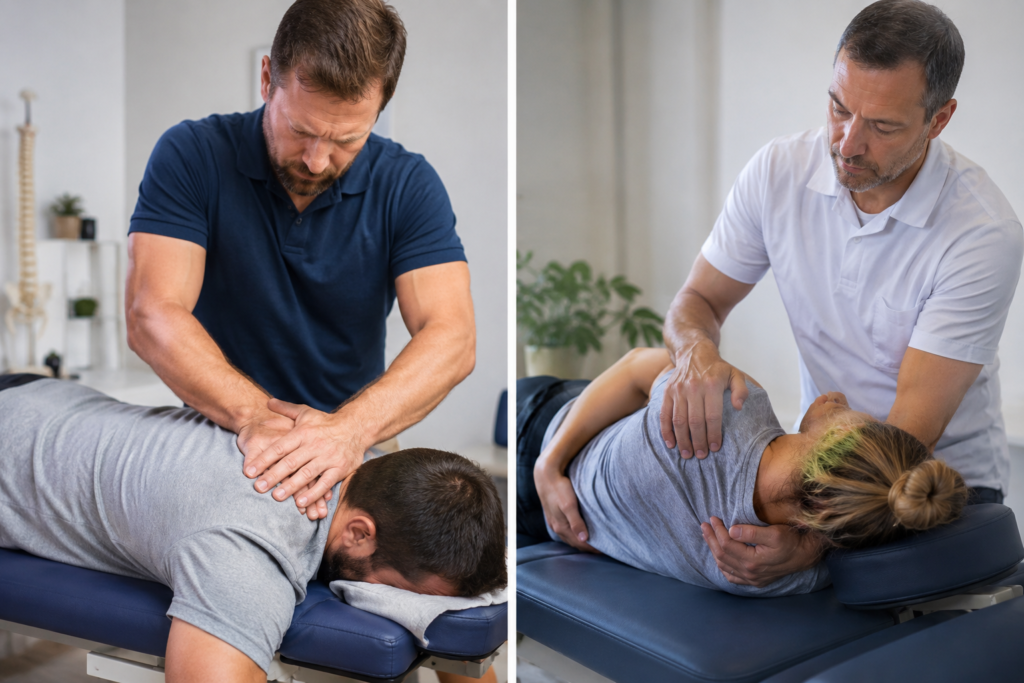
Manual therapy is hands-on treatment—plain and simple. A physiotherapist works directly on the area that’s causing you trouble, using techniques like joint mobilization, soft tissue massage, and spinal manipulation to reduce pain and get things moving again.
Manual therapy in Delhi is available at clinics across the city, and it’s a go-to option for things like lower back pain, a stiff neck that won’t budge, sports injuries, or recovery after surgery. Most physiotherapists don’t just treat you in the session—they’ll send you home with exercises that reinforce the work, so you’re not starting from zero each time you come in.
It tends to work best when the problem is specific and relatively recent.
What Is Osteopathy Treatment in Delhi?
Osteopathy works differently. Instead of zeroing in on the painful spot, an osteopath looks at the full picture—how your joints, muscles, posture, and even your organs are all influencing each other. Because sometimes the place that hurts isn’t actually the root of the problem.
Osteopathy treatment in Delhi uses gentle, targeted techniques—things like myofascial release, craniosacral therapy, and visceral manipulation—to address the structural imbalances that are quietly driving your pain. The goal is to get your body working better as a whole, so the pain doesn’t just keep cycling back.
Osteopathy Delhi is often a turning point for people who’ve already tried a few things without real, lasting results. Migraines that won’t quit, hip pain that keeps returning, back issues tied to how you sit or stand all day—these are exactly the kinds of problems osteopathy tends to be well-suited for.
How Do the Two Actually Compare?
Here’s a straightforward side-by-side:
| Manual Therapy | Osteopathy | |
| Focus | Specific joint or muscle | Whole-body system |
| Approach | Symptom-targeted | Root-cause oriented |
| Best for | Acute injuries, post-surgical care | Chronic pain, recurring conditions |
| Practitioner | Physiotherapist | Osteopath |
| Session length | 30–45 minutes | 45–60 minutes |
If your pain is recent and clearly tied to something specific, manual therapy can be a fast and effective way to get relief. If it keeps coming back no matter what you try, osteopathy is more likely to address why.
Osteopathy Treatment in Paschim Vihar – What to Know
If you live in West Delhi, you’ve got more options than you might think. Osteopathy treatment in Paschim Vihar is now available at several clinics in the area—some of which offer osteopathy and physiotherapy under the same roof. That kind of setup is genuinely useful. It means your treatment can shift and adapt without you having to start from scratch with a new provider.
When you’re choosing a clinic, don’t just pick the most convenient one. Ask about the practitioner’s background, what conditions they deal with regularly, and whether they actually take time to assess you before jumping into treatment. A good osteopath will want to know your full health history—not just where it hurts today.
So Which One Should You Choose?
Honestly? It depends on your situation.
If your pain is acute, localized, or linked to a clear cause, manual therapy is a strong starting point. If you’ve been dealing with something that keeps coming back, feels hard to pin down, or hasn’t responded well to other treatments, osteopathy treatment in Delhi is worth a serious look.
The good news is, these two approaches aren’t competing with each other. Plenty of people use manual therapy to manage flare-ups while using osteopathy to work on deeper, longer-term patterns. It doesn’t have to be either/or—it’s about figuring out what your body actually needs at this point in time.
Ready to Figure Out Your Next Step?
If you’re unsure where to start, talking to a qualified practitioner is the best move you can make. Pain is personal, and what’s worked for someone else might not be the right fit for you.
The Physiotherapist in Delhi website is a helpful place to begin. It connects you with experienced practitioners across Delhi who specialize in both manual therapy and osteopathy—so you can explore your options, ask the right questions, and find care that actually fits where you are right now.