
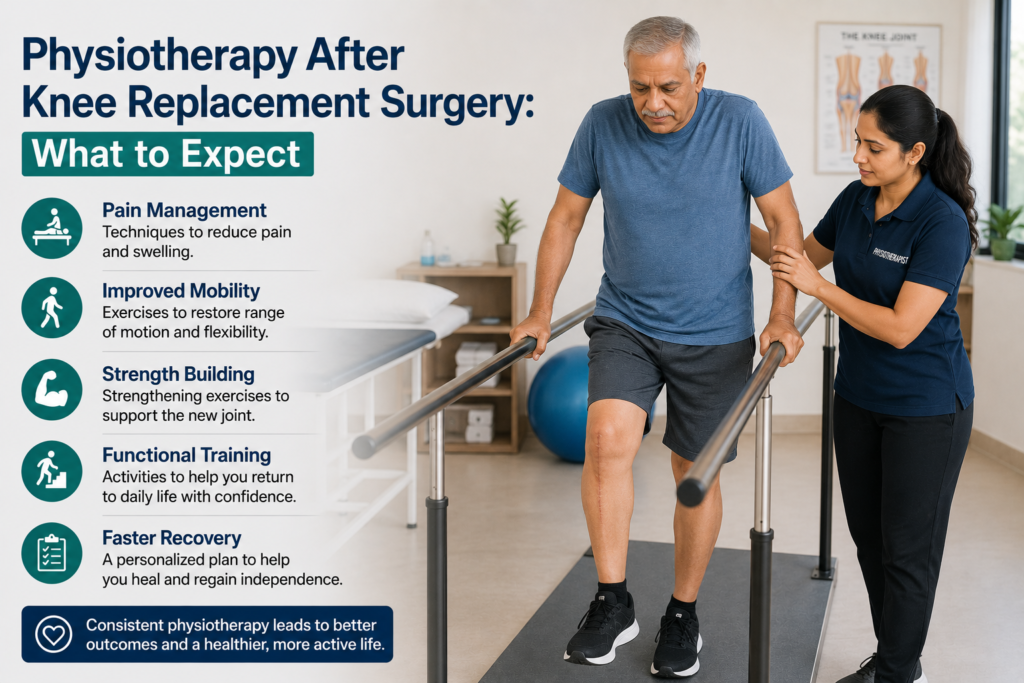
The procedure of undergoing a knee replacement is an important step toward getting back your mobility. The reality is that waking from anaesthesia is only the start of your journey. What really happens is when you are in rehab. Rebuilding a joint from scratch is something that requires a group effort. The physical therapist you choose to work with is the most crucial member of your team. Being aware of what’s in store could ease your anxiety about the procedure and prepare you for an easy, smooth recuperation.
What to Expect After Knee Replacement Physiotherapy: The Timeline
Your journey through physiotherapy after knee replacement surgery begins much earlier than you think. This is a well-organised plan that follows a step-by-step method created to guide you safely through the hospital and back to your routine.
Phase 1: Days 1 to 3 (The Hospital Phase)
Do not be shocked if your Therapist gets you up in the first 24 hours after the procedure. Initial goals are about survival basics:
- Learn how to climb up and down from bed without bending the knee.
- Making yourself comfortable with assistive equipment such as walkers and crutches.
- Practice simple ankle pumps to ensure your circulation is maintained and to prevent blood clots.
Phase 2: Weeks 1 to 3 (Early Home or Outpatient Rehab)
When you return to your home, post-knee surgery physiotherapy recovery is focused on reducing the swelling and getting back to early mobility. Your therapist can help you reduce pain by gently pushing your knee until it bends to an angle of 90 degrees so that it is comfortable to sit in the chair.
Phase 3: Weeks 4 to 6 (Reclaiming Independence)
At this point, the soreness from surgery begins to diminish. It is now about being able to walk without a limp, climbing stairs with confidence while gradually removing the cane or walker.
Essential Knee Replacement Rehabilitation Exercises
There is no way to just relax and allow the knee to recover on its own. It is necessary to teach the knee how to function. The therapist can customise the routine for you; however, you should expect to be very familiar with these fundamental moves:
- Quadriceps Sets: By tightening the thigh muscle and pressing your back knee into the mattress. The quadriceps are woken up, which are crucial in supporting your weight.
- Straight Leg Raise: Lifting your leg just a couple of inches above the mattress while keeping your knee fully in place. This helps to build essential stabilisation of the hips and core.
- Heel Slides: Slowly moving your heel in the direction of your buttocks, you will gradually increase the flexibility of your joint as well as your flexibility.
- Seated Knee Extensions: You can sit on a solid chair and bend the lower leg, ensuring your leg is straight and fully extended while walking.
Why Expert Guidance Matters
It’s easy to cut back on exercises during painful days or to push excessively on days of good health, but either one of them could result in joint stiffness for the long term. An expert will keep your body in the optimal state of recovery.
If you are recovering from an injury in the bustling capital of India, hands-on local medical attention can make all the difference. Working with a highly skilled physiotherapist in Delhi will ensure you receive individual attention, the most advanced swelling management strategies, and the consistent emotional assistance needed to reach your goals in a safe way.
The Road to Full Recovery
After three months, at which time most patients are returning to activities that are low impact, such as cycling, swimming, or driving. Though internal tissues could take up to one year to fully mature and develop, your commitment to your first therapy following the knee surgery determines the long-term health. If you’d like to achieve optimal results, it’s recommended to be in close contact with a reliable professional Physiotherapist in Delhi to help you through each step during your healing.